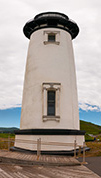
 In a recent photography project, I explored the idea that the way we look at something affects how we interpret it. This is similar to an earlier project that explored the importance of viewpoint, a related topic. In both cases, our personal biases and ways of looking at things influence what we see and how we understand it. It takes deliberate effort to try different perspectives, something that doesn’t come naturally. Yet, some of the most important things in life demand that we do this. For example, understanding someone else’s point of view can greatly strengthen a relationship. The deliberate effort pays off by helping us navigate something that’s inherently complex and subject to misinterpretation.
Another important example, also easy to gloss over, is the nature of reality and who we are in the world. All too often we just assume it’s only an abstract topic, yet many of life’s most important topics are deeply linked to this. Our ideas of purpose and value ultimately find their grounding in who we are and how we look at other people. Yet it’s easy to let those things get determined by a shallow, oversimplified view that relies only on what we see. However, the simple view of the world overlooks some very important things.
Look around at the world. Your senses give a picture of what’s there. Now look at yourself in a mirror, and wonder how this is different than looking at any other object. In the mirror, something is looking back at you. Of course, we prefer to say someone, because there is an experience, a person, behind the eyes. This phenomenon of self-awareness is unlike anything else in the material world. Being self aware involves things like beauty and wonder, or a desire for purpose and meaning, that transcend the limits of the material.
Look deeply into your own eyes and ask yourself if the only thing there is fancy chemistry. Is the experience of having an opinion purely mechanical, so that your own ideals and impressions are as meaningless and inevitable as the weather? Maybe complex, maybe hard to predict, but are they ultimately just physics?
Many people think so, but given the nature of consciousness and self-awareness, it seems reasonable to explore beyond just physics. Probing the nature of consciousness using only physical mechanisms presupposes that it is only a physical phenomenon. If physical actions produce changes, then we jump to the conclusion that it has a physical foundation, following the trail of confirmation bias. It’s like experimenting on stained glass windows by manipulating the glass and coming to the conclusion that since the experiments affect the glowing images, that the glass is the source of the light itself.
Perhaps not a perfect comparison, but tries to illustrate the value of exploration — deliberately looking at comparative explanations instead of just trying to validate a presupposed answer. This is the challenge of not being constrained by our worldview when seeking truth.
It seems easy to assume that, since we have so much success in other realms by focusing on the material, that of course it will work here. But this phenomenon is so different than anything else, that the assumption may not be justified.
That being said, what other ways might we explore the nature of consciousness? Some have tried drugs, but that seems like just a different type of physical manipulation. Perhaps we could look to things like art, or relationship. With art, we might explore the experience of beauty, try to understand what artists are expressing that doesn’t map onto the rational, and what types of common ideas emerge. Perhaps through observation of art, of the things that really speak to us, we can discover deeply foundational elements to our makeup without presuming where they come from.
With relationships, we learn to relate to someone else who seems sentient as we are. Exploring these concepts frame questions of the transcendent as relating to a sentience, rather than something like an extra dimension.
I may follow up on the relationship perspective in later posts, but the art aspect seems interesting to explore. Although not an artist myself, it does seem like a good reason for exploring photography and learning about art, as illustrated by the examples given in the beginning. Having played around with spherical photography, using it to explore the transcendent would give a focus for taking pictures, providing a depth that my work currently lacks.
 Kelvin's Clouds