Threads of Pointers

Throughout history, there have been stories of the supernatural. These stories were often invoked to explain mysteries such as the origin of the world, the forces behind weather, the causes of disease, and the prevalence of coincidences. However, these stories often went beyond simple explanations and were personal accounts of people encountering things beyond natural, everyday experience. The fact that these things could also have explained some mysteries may have been interesting and possibly useful at the time, but was beside the point in many cases.

More recently, and especially over the last few centuries, many other unknowns either have not been explained by science or, like consciousness, have actually become bigger mysteries.1 In addition, mathematics has shown that there are fundamental limits of our understanding in any rational system, and science has discovered what appear to be fundamental limits in our ability to explain physical reality.2

Continue reading

Science and Religion Conversations

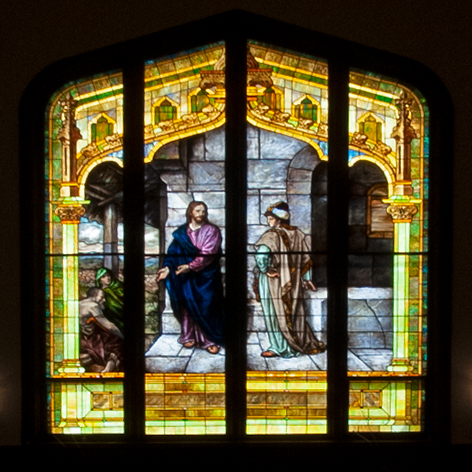
Many people believe that there is a conflict between science and religion. This is often exemplified by debates about evolution, the age of the Earth, claims of miracles, and so on. Historically, events like the Galileo affair and the Scopes trial seem to illustrate the existence of a broad conflict. While these disagreements certainly exist, when looked at closer it turns out that they are isolated cases of disagreement based on specific ideas and do not necessarily represent broad conflict.

Most scholars today see the relationship between science and religion as more nuanced and dependent on each individual’s views. One common view is that science and religion deal with different domains entirely, so that as long as each stays in its proper domain, there could be no conflict. Others believe that there is interaction between them, and that resolving apparent disagreements is a way to improve understanding of both domains.

Continue reading

Hope in Mind

In the previous post, we looked at what it might be like to express our beliefs as hopes, at least those beliefs about which we cannot be certain.

We don’t have a complete understanding about the nature of reality – the meaning of life, the possibility of afterlife, the nature of human consciousness, and so on. As it stands right now, our best scientific, rational understanding of these topics is incomplete. Despite this uncertainty, we all make choices about these things in how we let them guide our lives, and we often treat these as firmly held beliefs.

The result is that we’re believing in things that we can’t know are true, but we still expect with confidence to be the case. In other words, we hope these things are true.

In the previous post, we looked at an example to see how this works. That example was about the meaning of life. For another example, consider the “hard problem” of consciousness. It is considered a hard problem because we still know so little about it and it is so different from all other physical things that the path to better understanding is not at all clear.

Continue reading

Hope

Earlier posts describe one of the key ideas on this blog, that we don’t know enough to be certain of metaphysical truths. That means we have to make a choice about what to believe, and that choice is going to have some level of uncertainty.

Another way of describing this uncertainty is to say that our beliefs about metaphysical truths are really hopes – they represent what we hope is true, such that we act in agreement with that hope.

Continue reading

Picturing the Unique Nature of Consciousness

In the previous essay, I discussed the possibility that the brain is necessary to consciousness but that it is not sufficient. In other words, that there seems to be something needed beyond our current understanding of the physical. History, however, shows that science has often been challenged with such paradigm shifts.

Sometimes metaphors can help us see beyond such biases and preconceptions, so in this essay we’ll consider a picture that may illustrate why consciousness is so unique, and why it’s too early to start limiting options for explaining it.

Continue reading

Complex Motives

Discussions of the weakness of religion sometimes end up attempting to address God’s motives with questions that start with an observation about God’s character, then question that observation based on what is seen in the world.

These challenges often take the form of: “Why would a loving God allow…?” or something similar.

The idea being that the characteristic in question, in this case a loving nature, is incompatible with what we see in the world around us.

One of the common responses to this from Christians is essentially that God’s ways are unfathomable to us, so we should not expect to understand why some things happen. However, this approach is often rejected, being seen as something of a copout – avoiding the question altogether rather than addressing it.

However, note how reasonable this answer seems when talking about human behavior. It’s well known that we need to be careful when trying to understand someone else’s motives because there are so many factors we don’t know.

Continue reading

Seeing Confirmation Bias

Photographers often strive to find new ways of seeing the world. In a sense, this involves looking for new information, which is a healthy way to live. Unfortunately, we tend to avoid this due to our innate tendency for something called “confirmation bias”.

Confirmation bias is the tendency to search for, interpret, favor, and recall information in a way that confirms or supports one’s prior beliefs or values. People display this bias when they select information that supports their views, ignoring contrary information, or when they interpret ambiguous evidence as supporting their existing attitudes. –Wikipedia

Confirmation bias makes it harder for us to adopt new perspectives, perhaps even to learn new ideas, because we will tend to avoid information that could lead us to change existing beliefs.

Continue reading

Convergence

With so many different viewpoints and sources of information today, how can we best tell when something is true? That’s a big question, but one helpful thing is to notice when separate lines of evidence converge to a consistent answer.

One of the problems with interpreting sources is avoiding confirmation bias. This is when we look for sources that say what we already think. It’s a very common human trait and is largely amplified by social media and today’s biased news sources.

Continue reading

Why Rational Ethics?

There's_no_crying_in_baseball!In searching to understand natural worldviews, one of the things that keeps coming up is the need to develop a system of morals. Ethics is generally part of religious worldviews, but it seems generally accepted that ethics in a natural worldview are developed from reasoning, logic, and some sort of shared values. For example, sentience is often considered valuable, so that particular shared value can form the basis of an ethics.
After looking at several rational, naturalistic approaches to defining values and morals, I’m left wondering about the general approach taken in developing these frameworks. One of the common elements seems to be that they are based on an assumption that the process can be approached as a rational exercise. In other words, given one or more shared values as described earlier, one can then apply some sort of logical or rational reasoning or thought process to develop an ethical framework.

The problem with this is that modern psychology and cognitive science have pretty clearly shown that humans are not generally rational, logical thinkers. Mind you, that doesn’t mean that rational thought plays no role at all, simply that it’s only one of several things that go into our mental processing, especially regarding things like setting values.

Seems like this raises a question: Should we really expect human ethical frameworks to be based on rational thought instead of taking into account all that it means to be human? In other words, why should we expect it to be possible to rationally establish human values and morals when humans themselves are not rational? * Continue reading

Two Fine Tuning Hypotheses

Nebula-smOne of the nagging mysteries of modern physics is something called the “Fine-tuned Universe” question. It has to do with the fact that our universe has properties that are exactly what’s needed for life to exist. However, our best understanding of these properties seems to indicate that it’s much more likely for the universe to be simpler, so much simpler that life could not exist, so that it’s incredibly unlikely to have just the right properties. The reason for this has to do with the nature of physical laws and how they depend on a small number of constants that seem to have random values. There seems to be no reason for the constants to have the values that they do have, so out of all possible values, why these very particular ones?

Some people have dismissed the whole issue, trying to explain it away as an artifact of the way we approach things, or the result of our limited understanding. However, the mainstream scientific view is that this is a very valid question, one for which we should seek some answer. Continue reading