In this blog, I explore metaphysical topics with an eye towards religion, mainly from a science perspective. After all, the title of the blog is taken from a speech from one of history’s great scientists. However, it’s well-known that there are limits to science, including the fact that some topics are difficult to address with scientific methods.
Because this is the case, we need to be careful with our level of certainty about topics which are not yet well understood. For example, more and more research is being conducted to understand consciousness. This is becoming increasingly relevant with the recent developments of artificial intelligence. However, there is no way to directly probe consciousness with the tools and methodologies of science; the work done by neurologists and similar and investigate things related to consciousness, but not the phenomenon itself. This is because consciousness is a strictly subjective phenomenon.
Continue reading
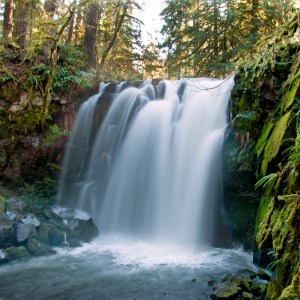 This is Majestic Falls, in McDowell Creek Falls area, taken on a morning that was supposed to be cloudy but turned out sunny. Fortunately we made it there before the sun became a problem. Taken with a long exposure, the falling water appears silky smooth, almost like a wisp.
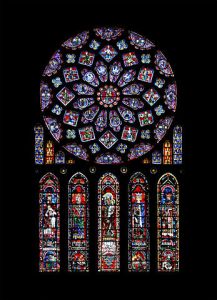 While taking a picture recently that included some beautiful stained glass windows, I learned how difficult it is to make a good picture. The back light through the windows makes it challenging to capture an image that blends with the rest of the scene. The key seems to be balance between the front lighting and the back lighting. If either one is too strong, the result is not beautiful. With only back lighting, the colors are beautiful, but the context of everything is gone. With only front lighting, the picture is clear and balanced with the context, but much of the beauty is gone.
 Simple virtual reality (VR) photographs, sometimes known as spherical panoramas, are all around us. A few years ago, they were novelties used in special effects productions, advertising, and other niche applications. Now they are frequently used in common applications like Google Street View, games, Facebook, and so on, and smartphones provide an easy way to view them. Specialized hardware can even be used to extend the effect to 3D, but the basic idea of looking around the inside of a sphere remains a useful variation of the standard flat picture.
 Kelvin's Clouds