Science, Religion, and Uncertainty

The idea that there is a war between science and technology is very common and it’s easy to believe it from some of the very public conflicts that have occurred. Because of this perception, it’s often difficult to have relaxed, interesting conversations about science and religion. Many of us instead just assume that it’s not really that important or even worth talking about. After all, this is the realm of metaphysics, something that doesn’t really impact daily life, right?

However, it turns out that metaphysical considerations are the basis for most people’s ethics, even when we don’t think about that. In other words, our views on things typically considered religious, such as a formal code of ethics, life after death, a moral creator, and so on, really determine our moral views. The fact that most people in the west have ethics based on Judeo-Christian ideals, whether they are Christian or not, is not widely understood.

So if it’s important to have a considered opinion here, how do we deal with the issue of their apparent conflict? Perhaps we can start by looking at where some of the conflicts seem to come up.

Continue reading

Science and Religion Conversations

Many people believe that there is a conflict between science and religion. This is often exemplified by debates about evolution, the age of the Earth, claims of miracles, and so on. Historically, events like the Galileo affair and the Scopes trial seem to illustrate the existence of a broad conflict. While these disagreements certainly exist, when looked at closer it turns out that they are isolated cases of disagreement based on specific ideas and do not necessarily represent broad conflict.

Most scholars today see the relationship between science and religion as more nuanced and dependent on each individual’s views. One common view is that science and religion deal with different domains entirely, so that as long as each stays in its proper domain, there could be no conflict. Others believe that there is interaction between them, and that resolving apparent disagreements is a way to improve understanding of both domains.

Continue reading

Secular Bias

Religious people are commonly thought to be biased towards believing things that cannot be proven, that must be taken on faith. Often, the idea of faith is taken to mean that there is no evidence at all. When this perspective involves science, the result is sometimes pseudo science – things that sound scientific but are actually implausible or even incorrect.

There is often also an implicit assumption that non-religious people do not have such biases, and that secular reasoning is more rational. However, it’s clear that isn’t always the case, since all people are subject to various biases and some examples from history illustrate this particular case.

It turns out that throughout history, new ideas have been put forth that stretch existing perspectives in ways that sometimes look like religion. It seems like this is more common when the discoveries are at the edge of known science. That makes sense, because ideas that truly extend our understanding are likely to look unusual. So if that unusual characteristic looks supernatural in some way, then it is easily dismissed out of hand by secular thinking.

For example, floods swept across the Pacific Northwest at the end of the last ice age. These are called the Missoula Floods. When they were first proposed, they went against the prevailing perspective that geologic processes were generally uniform over time, not catastrophic. In addition, the catastrophic nature of the proposed floods seemed similar to the Biblical flood narrative, and this association made acceptance of the proposal even harder for some people.

Similarly, when astronomical observations began to indicate that the universe was expanding and scientists realized this implied that it had a beginning, the Big Bang model was developed. However, many did not like that proposal, and instead promoted a steady state expansion. One of the difficulties that some people had with accepting the Big Bang model was that it was too close to the idea of a Biblical creation. In addition, the concept of a beginning to space and time raised the uncomfortable (and almost metaphysical) question about what might exist outside of our spacetime reality.

Even Einstein, when struggling with some of the strange ideas related to quantum physics, referred to them as “spooky action at a distance”, as if even the appearance of something supernatural was reason to suspect it.

In all these cases, the new ideas turned out to be right, but the bias of secular thinking caused some scientists to reject them.

A new area where similarly biased thinking may be happening is with research into the nature of consciousness. This is definitely a topic that is at the edge of known science, so it is very possible that new ideas may be needed. However, because consciousness seems to be immaterial, some of the emerging ideas seem to involve metaphysics even though they have nothing to do with religion or anything supernatural.

For example, some researchers use the term “soul” as a shorthand way of representing this seemingly immaterial aspect of consciousness, even when they are not talking about anything supernatural.

The danger, of course, is that some researchers will dismiss such ideas because of a potential link to religion, just like in the previous examples. However, while those examples took time to have significant societal impact, the need for us to understand consciousness may be coming faster with the advent of Artificial Intelligence (AI).

The development of AI is beginning to raise a number of questions that would benefit from, maybe even require, a better understanding of consciousness. At some point, we will want to assess whether the things we are creating are conscious, how they relate to humans, whether they should be treated as people, and even how they might affect us as conscious beings ourselves.

Robust understanding of these things could guide the development and deployment of AI, but since we don’t currently have such understanding, AI is progressing in an unguided manner. Whether this turns out to be a problem remains to be seen, but in the race between developing and understanding AI, especially given the serious implications, it seems prudent to leave open all avenues of investigation without slowing things down due to unfounded biases.

Kelvin’s Clouds

The term “Kelvin’s Clouds” is a reference to a famous lecture given by Lord Kelvin (William Thomson) in 1900. It is often used to illustrate the limits of physics. I use it as the title of this blog as a reminder of the humility needed when considering fundamental questions about reality and the human condition.

Lord Kelvin was a famous scientist after whom the Kelvin temperature scale was named. On April 27, 1900, he delivered the Friday Evening Lecture at the Royal institution in London. In that lecture, he described two urgent challenges of conventional physics regarding “the theory of heat and light”. One of the challenges had to do with the luminiferous ether, and the other with something called the equipartition of energy. He described each of these problems as “clouds”.1

The first cloud, regarding the ether, was resolved with the development of the theory of special relativity. The second cloud was resolved with the development of quantum physics. The development of these two new branches of physics completely redefined our understanding of reality.2

Today, we face a larger, even growing, set of clouds. For example, a theory called “M-theory”, which was hoped to unify relativity and quantum mechanics, has not been supported by the latest particle physics experiments, leaving a whole host of questions without a clear path to solution. Other examples exist both within and outside physics such that we clearly need to be careful when making assertions of absolute truth.

In particular, metaphysical views are often held with deep certainty even though Kelvin’s Clouds should teach us that we need to be humble and constantly learning. Questions regarding science and religion are often contentious, but it seems clear that we really don’t know enough about the world to be certain about things like the existence of God, the ultimate nature of consciousness and humanity, whether life has purpose and meaning beyond what we give it, and so on.

Of course, over time we will continue to learn and perhaps some clouds will be eliminated, perhaps some mysteries will be solved. But, maybe not all. Maybe there are fundamental limits to our ability to know.

In either case, we can’t just throw up our hands until everything is clear, we need to decide how to live in the face of uncertainty, to prioritize and make decisions in life. We each need some perspective, some worldview to make sense of what we do know.

Ideally, one’s worldview would be informed by a variety of perspectives, constantly learning and (when necessary) adapting, and rational without being dogmatic.

The goal of this blog is to explore my own views on science and faith, hopefully in a way that embodies those principles.


(1) many references to this speech describe Kelvin’s second cloud as having to do with block body radiation, but that is incorrect. A good description of the speech and its history can found in this paper: Oliver Passon , “Kelvin’s clouds”, American Journal of Physics 89, 1037-1041 (2021) https://doi.org/10.1119/10.0005620

(2) In addition, the development of quantum mechanics and relativity have shown us that there may be fundamental limits in our ability to describe reality due to the lack of infinite precision in measurements and the hard limit of the uncertainty principle.

Investigating Consciousness

multicolored pebbles on white ceramic bowl

Photo by Steve Johnson on Pexels.com

Imagine you have a bowl full of little chunks of unknown material. You want to determine what sorts of materials are in the bowl so you decide to sample some and analyze it. You gather a sample from the bowl by placing a magnet in it and removing whatever sticks to it. Upon analysis you discover that everything in the sample is made of metal, and so conclude that all the material in the bowl was metal.

Do you see anything wrong with this scenario? Continue reading

Two Fine Tuning Hypotheses

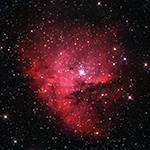
Nebula-smOne of the nagging mysteries of modern physics is something called the “Fine-tuned Universe” question. It has to do with the fact that our universe has properties that are exactly what’s needed for life to exist. However, our best understanding of these properties seems to indicate that it’s much more likely for the universe to be simpler, so much simpler that life could not exist, so that it’s incredibly unlikely to have just the right properties. The reason for this has to do with the nature of physical laws and how they depend on a small number of constants that seem to have random values. There seems to be no reason for the constants to have the values that they do have, so out of all possible values, why these very particular ones?

Some people have dismissed the whole issue, trying to explain it away as an artifact of the way we approach things, or the result of our limited understanding. However, the mainstream scientific view is that this is a very valid question, one for which we should seek some answer. Continue reading

My Theistic Framework

DecisionsFor the past few years, I’ve been pondering religion “versus” science issues and have worked out an initial attempt of what seems reasonable to me. This post summarizes the ideas as a starting point for more detailed exploration, both with study and discussion with others. The basic idea is that it is a finely balanced choice, more finely balanced than most like to admit. The goal here is to be able to articulate why to make a particular choice, rather than just say “It’s how i was raised”, or “I like this”, or “I don’t like that”, etc. It’s an attempt at a rational perspective. Continue reading

Proof, Evidence, and Faith

A friend recently wrote an essay discussing faith. In it, he gave one of the standard definitions of faith as “A belief that is not based on proof.” The common understanding is that religious beliefs are examples of this, especially since religions tend to use the same word in related (although not identical) fashions. I think this is a good working definition for discussing matters of science and faith, but want to explore how it may miss some subtleties in how we really approach beliefs. Continue reading

Seeking the Nature of Reality

Science has made such progress in the last few centuries that it seems little true mystery remains. In fact, it seems probable that most of the fundamental principles have been worked out. It may be that we are approaching the point of merely refining details of the few clouds remaining in our otherwise clear understanding of the universe. Application of science has changed the world in dramatic ways, illustrating a deep mastery of knowledge.

This success seems to preclude the ancient perspectives of religion and spirituality. Things the ancients wondered about, that they couldn’t understand and so attributed to gods, are now the stuff of high school science lessons. There seems no need for God in a world increasingly ruled by use of this knowledge.

But it’s easy to overstate this. Our ability to manipulate the world is not the same thing as understanding it at its most fundamental level. Just because we have good carpentry tools, doesn’t mean we understand the essence of life and the biology of trees. Just because we can make fine pens and software for writing doesn’t mean we understand the deepest heart and mind behind poetry. Continue reading

Our Place in Creation

ErraticRockThis is the view from Erratic Rock State Natural Site near McMinnville, Oregon. The large rock in the foreground originated in the northern Rocky Mountains, nowhere near this spot. It is the only rock of its type outside Canada, and was transported here during a massive Ice Age flood around 15 thousand years ago. Titanic floods washed down eastern Washington, scoured their way through the gorge, then filled the valley with water. The water was filled with debris including icebergs from the flood’s origin, some of which carried boulders. As the ice melted and the waters receded, this boulder remained, a silent testimony to the power and extent of the flood. The view from this point helps us appreciate the scale of the flood. Continue reading