 In searching to understand natural worldviews, one of the things that keeps coming up is the need to develop a system of morals. Ethics is generally part of religious worldviews, but it seems generally accepted that ethics in a natural worldview are developed from reasoning, logic, and some sort of shared values. For example, sentience is often considered valuable, so that particular shared value can form the basis of an ethics.
After looking at several rational, naturalistic approaches to defining values and morals, I’m left wondering about the general approach taken in developing these frameworks. One of the common elements seems to be that they are based on an assumption that the process can be approached as a rational exercise. In other words, given one or more shared values as described earlier, one can then apply some sort of logical or rational reasoning or thought process to develop an ethical framework.
The problem with this is that modern psychology and cognitive science have pretty clearly shown that humans are not generally rational, logical thinkers. Mind you, that doesn’t mean that rational thought plays no role at all, simply that it’s only one of several things that go into our mental processing, especially regarding things like setting values.
Seems like this raises a question: Should we really expect human ethical frameworks to be based on rational thought instead of taking into account all that it means to be human? In other words, why should we expect it to be possible to rationally establish human values and morals when humans themselves are not rational? * Continue reading
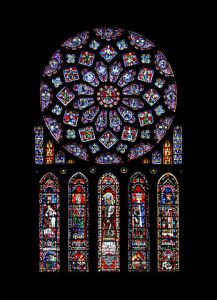 While taking a picture recently that included some beautiful stained glass windows, I learned how difficult it is to make a good picture. The back light through the windows makes it challenging to capture an image that blends with the rest of the scene. The key seems to be balance between the front lighting and the back lighting. If either one is too strong, the result is not beautiful. With only back lighting, the colors are beautiful, but the context of everything is gone. With only front lighting, the picture is clear and balanced with the context, but much of the beauty is gone.
 Simple virtual reality (VR) photographs, sometimes known as spherical panoramas, are all around us. A few years ago, they were novelties used in special effects productions, advertising, and other niche applications. Now they are frequently used in common applications like Google Street View, games, Facebook, and so on, and smartphones provide an easy way to view them. Specialized hardware can even be used to extend the effect to 3D, but the basic idea of looking around the inside of a sphere remains a useful variation of the standard flat picture.
 One of the nagging mysteries of modern physics is something called the “Fine-tuned Universe” question. It has to do with the fact that our universe has properties that are exactly what’s needed for life to exist. However, our best understanding of these properties seems to indicate that it’s much more likely for the universe to be simpler, so much simpler that life could not exist, so that it’s incredibly unlikely to have just the right properties. The reason for this has to do with the nature of physical laws and how they depend on a small number of constants that seem to have random values. There seems to be no reason for the constants to have the values that they do have, so out of all possible values, why these very particular ones?
 Sometimes we become so used to the way things work that we don’t even realize when there are options. Yet simple thought experiments can reveal possibilities that we would never see if we just rearrange normal daily experiences. In this essay, we’ll consider such a thought experiment to see what we can learn about relationships and the way all living beings interact, and consider what it might look like to turn a fundamental aspect of life upside down.
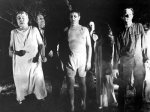 In the continuing comparison of natural and supernatural views of reality, we’ve considered some fairly philosophical perspectives. However, for these things to be real, we would expect clear manifestations, some evidence in the natural world. It may or may not be strictly testable, but there should be some ramification. In this essay, we’ll consider an example of what we might expect, drawn from a movie.
 Kelvin's Clouds