 In a recent photography project, I explored the idea that the way we look at something affects how we interpret it. This is similar to an earlier project that explored the importance of viewpoint, a related topic. In both cases, our personal biases and ways of looking at things influence what we see and how we understand it. It takes deliberate effort to try different perspectives, something that doesn’t come naturally. Yet, some of the most important things in life demand that we do this. For example, understanding someone else’s point of view can greatly strengthen a relationship. The deliberate effort pays off by helping us navigate something that’s inherently complex and subject to misinterpretation. Continue reading
Tag Archives: science and faith
Stained Glass and the Mind
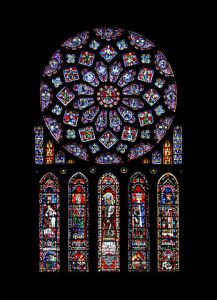 While taking a picture recently that included some beautiful stained glass windows, I learned how difficult it is to make a good picture. The back light through the windows makes it challenging to capture an image that blends with the rest of the scene. The key seems to be balance between the front lighting and the back lighting. If either one is too strong, the result is not beautiful. With only back lighting, the colors are beautiful, but the context of everything is gone. With only front lighting, the picture is clear and balanced with the context, but much of the beauty is gone.
This brought to mind the interplay of the physical and the transcendent, and in particular, how they intersect in the human mind. Continue reading
Two Fine Tuning Hypotheses
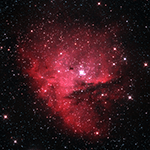 One of the nagging mysteries of modern physics is something called the “Fine-tuned Universe” question. It has to do with the fact that our universe has properties that are exactly what’s needed for life to exist. However, our best understanding of these properties seems to indicate that it’s much more likely for the universe to be simpler, so much simpler that life could not exist, so that it’s incredibly unlikely to have just the right properties. The reason for this has to do with the nature of physical laws and how they depend on a small number of constants that seem to have random values. There seems to be no reason for the constants to have the values that they do have, so out of all possible values, why these very particular ones?
Some people have dismissed the whole issue, trying to explain it away as an artifact of the way we approach things, or the result of our limited understanding. However, the mainstream scientific view is that this is a very valid question, one for which we should seek some answer. Continue reading
A Thought Experiment of Two Realities
 Sometimes we become so used to the way things work that we don’t even realize when there are options. Yet simple thought experiments can reveal possibilities that we would never see if we just rearrange normal daily experiences. In this essay, we’ll consider such a thought experiment to see what we can learn about relationships and the way all living beings interact, and consider what it might look like to turn a fundamental aspect of life upside down. Continue reading
My Theistic Framework
 For the past few years, I’ve been pondering religion “versus” science issues and have worked out an initial attempt of what seems reasonable to me. This post summarizes the ideas as a starting point for more detailed exploration, both with study and discussion with others. The basic idea is that it is a finely balanced choice, more finely balanced than most like to admit. The goal here is to be able to articulate why to make a particular choice, rather than just say “It’s how i was raised”, or “I like this”, or “I don’t like that”, etc. It’s an attempt at a rational perspective. Continue reading
Seeking a Balanced View of Science and Faith
Throughout human history, mankind has looked to the supernatural to explain things that seemed mysterious. There was a lot of motivation for this, because much of the unknown seemed dangerous — maybe invoking the supernatural could bring benefit in the natural realm. However, as knowledge of the natural world became more and more complete and successful, there seemed less and less need for the supernatural. For many, it became interesting, but not important.
Yet needs and fears didn’t really go away, they changed. We no longer fear the dark, but fear uselessness and hopelessness. We no longer struggle to find food, but still struggle with the need for love and relationship. We seek to understand the unknown instead of fearing it, but also seek a basis for right and wrong. And so religion has persisted, itself evolving from mere dogma to something more transcendent, still claiming to shine a light on these persistent aspects of being human.
So now we are faced with a question: Has science provided enough of a solution, or is faith still the answer for such fundamental needs? Continue reading
Proof, Evidence, and Faith
A friend recently wrote an essay discussing faith. In it, he gave one of the standard definitions of faith as “A belief that is not based on proof.” The common understanding is that religious beliefs are examples of this, especially since religions tend to use the same word in related (although not identical) fashions. I think this is a good working definition for discussing matters of science and faith, but want to explore how it may miss some subtleties in how we really approach beliefs. Continue reading
Seeking the Nature of Reality
Science has made such progress in the last few centuries that it seems little true mystery remains. In fact, it seems probable that most of the fundamental principles have been worked out. It may be that we are approaching the point of merely refining details of the few clouds remaining in our otherwise clear understanding of the universe. Application of science has changed the world in dramatic ways, illustrating a deep mastery of knowledge.
This success seems to preclude the ancient perspectives of religion and spirituality. Things the ancients wondered about, that they couldn’t understand and so attributed to gods, are now the stuff of high school science lessons. There seems no need for God in a world increasingly ruled by use of this knowledge.
But it’s easy to overstate this. Our ability to manipulate the world is not the same thing as understanding it at its most fundamental level. Just because we have good carpentry tools, doesn’t mean we understand the essence of life and the biology of trees. Just because we can make fine pens and software for writing doesn’t mean we understand the deepest heart and mind behind poetry. Continue reading
Thinking Beyond Cognitive Limits
One of the interesting accounts in Daniel Kahneman’s book “Thinking, Fast and Slow”, is a combination of two things: First, a description of the reasons why certain types of planning don’t work because of limitations in the human mind, and how to work around that. Second, the account of a bunch smart folks working together on a project, and making those very mistakes. I think this raises a very interesting, and possibly fundamental, question about reality.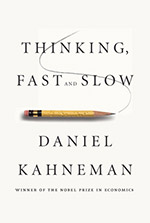 Continue reading
The Big Bang and the Creator’s Voice
 At the creation of the universe, such vast power was unleashed that it still echoes through the heavens. In an instant, all that exists was forged from nothing. A resulting faint afterglow of radio waves carries with it the signature of those first moments, and by studying that signature we can learn about the beginning.
However, the lingering afterglow does more than paint a picture of the first few seconds of creation, it also points to the Creator. Continue reading

