A friend and I recently exchanged one-page descriptions of our respective belief systems. Here’s mine:
What is my worldview, my guiding principles for making life decisions?
A proper worldview includes elements of testing and continuing refinement since both individuals and the world are constantly changing, so is not static, but represents continual seeking to avoid dogmatism. The assumed goal of a worldview is to optimize personal and societal flourishing.
Three broad streams from which one can draw perspectives to inform a worldview are: personal experience, other human experiences across both time and space, and rational thought and related systems such as science. Although we commonly hold views in all these areas with great certainty, they are all in fact filled with fundamental unknowns. Thus, the challenge is to have a rational worldview despite the uncertainties.
My approach is to seek shared threads in these streams, to identify threads that exist across human experience and wisdom, that resonate with personal experience, and that also cohere with our best understanding of the world. My belief is that, while this can help eliminate irrational worldviews, there is too much uncertainty to define a single correct one.
One thing that exists across these is the universality of moral value systems, the recognition that there is good and evil, even though there is little agreement of what goes into each. This includes recognition of the fundamentally selfish basis of all life, the sense of this creation being broken in some sense, and the awareness that there are better possibilities. While it does seem that human society is advancing beyond this selfish bias, there is an inevitable tension with this intrinsic nature, making the only foreseeable solution a sort of mechanized, rule-driven society.
We recognize that a better way exists (love) that inverts the natural self-focused nature into one that is fundamentally self-less, in which we are agents of self-giving rather than self-getting. Imagine an existence in which everyone has this nature, perhaps all creation has shifted to this perspective. A simple model like this makes the end goal clear but is clearly not attainable without a transformation of humanity, possibly all creation.
Another thing that is consistently part of human experience through all cultures is a belief in some reality beyond the material. This often includes the existence of a transcendent agent that can interact with our physical reality, having created it, and interacts with humans who were created and reflect that transcendent nature. An implication of this is the idea of a cosmic purpose or direction, which typically shows up in the form of epic journey narratives, art and the awareness of beauty, the ideals of technological advance, and so on.
This implication links the two observations of morality and transcendence in that, while the first (recognition of brokenness) reveals the futility of achieving an ideal state in this world, the existence of something more than this world provides hope of a solution. The existence of an initial creator that is still involved in the ongoing improvement of the human condition provides hope of a re-creation into a final, unbroken state. Hope in a worldview is the best we can do because of the limits of knowledge.
This hope of a solution is best presented in the Christian narrative, in which the creator has described love as the ultimate reality but has given us the option of whether or not to recognize and accept it. The incarnation demonstrated the extended reality and has started the process of bringing this reality through changed hearts, which we see working out through human history, and the resurrection demonstrated the reality of re-creation. Our own transformation and re-creation, to participate in this hope, happens with God’s involvement. We are not alone.

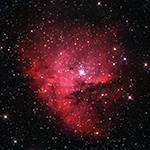 One of the nagging mysteries of modern physics is something called the “Fine-tuned Universe” question. It has to do with the fact that our universe has properties that are exactly what’s needed for life to exist. However, our best understanding of these properties seems to indicate that it’s much more likely for the universe to be simpler, so much simpler that life could not exist, so that it’s incredibly unlikely to have just the right properties. The reason for this has to do with the nature of physical laws and how they depend on a small number of constants that seem to have random values. There seems to be no reason for the constants to have the values that they do have, so out of all possible values, why these very particular ones?
 Sometimes we become so used to the way things work that we don’t even realize when there are options. Yet simple thought experiments can reveal possibilities that we would never see if we just rearrange normal daily experiences. In this essay, we’ll consider such a thought experiment to see what we can learn about relationships and the way all living beings interact, and consider what it might look like to turn a fundamental aspect of life upside down.
 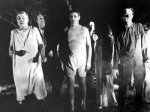 In the continuing comparison of natural and supernatural views of reality, we’ve considered some fairly philosophical perspectives. However, for these things to be real, we would expect clear manifestations, some evidence in the natural world. It may or may not be strictly testable, but there should be some ramification. In this essay, we’ll consider an example of what we might expect, drawn from a movie.
 For the past few years, I’ve been pondering religion “versus” science issues and have worked out an initial attempt of what seems reasonable to me. This post summarizes the ideas as a starting point for more detailed exploration, both with study and discussion with others. The basic idea is that it is a finely balanced choice, more finely balanced than most like to admit. The goal here is to be able to articulate why to make a particular choice, rather than just say “It’s how i was raised”, or “I like this”, or “I don’t like that”, etc. It’s an attempt at a rational perspective.
